
Slider with alias Inner not found. There is nothing to show here!

Author: admin

The impact of hearing impairment on overall language development

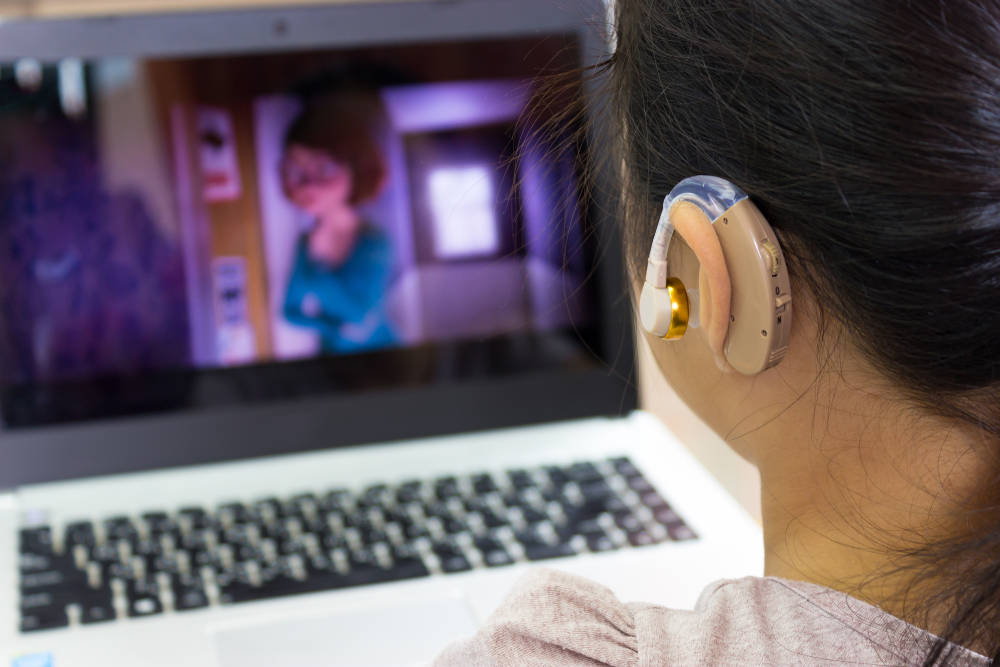
  Written by: Lee Wing Yan, Speech Therapist at the Hong Kong Speech and Swallowing Therapy Centre In my work, I once encountered a 5-year-old child. Like other children of his age, he appeared well-behaved and polite. However, he had a distinctive feature that set him apart from his peers – he had a hearing aid in his left ear. He was a child with a hearing impairment. As the name suggests, hearing impairment is defined as a “disability caused by impaired hearing, ranging from mild to complete deafness.” Does hearing impairment only affect a child’s auditory perception? Understanding Surrounding Sounds to Build Concepts Consider this: before toddlers learn to articulate meaningful words, what ability do they possess? They engage in what we commonly refer to as “baby talk.” Now, what crucial step do toddlers take before mastering “baby talk”? It’s the ability to understand the sounds in their environment and establish concepts through interaction with sounds, including meaningful conversations with parents, nursery rhymes, etc. They learn to comprehend that different sounds represent different people, things, and objects, gradually understanding words and building language. Therefore, due to reduced and weaker sensory stimulation in the aspect of “hearing,” children with hearing impairment may experience delayed language development. Reduced Listening Experience and Difficulty Following Instructions Children with hearing impairment cannot fully receive external information through the sensory aspect of “hearing,” reducing opportunities for listening experiences and language exposure. As a result, they often exhibit inattentiveness, difficulty following instructions, and challenges in understanding

閱讀更多 »

Children react differently to stress; parental trust is the most important

In recent days, there have been continuous reports of students attempting suicide, a situation that is cause for concern. As parents, we often feel that adults face much greater pressure dealing with work, family, and financial issues than children do. However, Dr. Wong Chung Hin, a specialist in psychiatry, reminds us: “Clinically, cases of emotional distress due to stress are observed in primary, secondary, and university students. Parents should carefully observe any changes in their children’s behavior, patiently listen to their thoughts, and refrain from making hasty criticisms. The most important thing is to believe in your children and encourage them to express themselves.” The reasons for emotional issues arising from stress in children go beyond academic performance and include family expectations, peer relationships, school bullying, family problems, and family history. Dr. Wong recalls, “When facing the death of a family member, relatives are often busy dealing with post-mortem matters or various rituals, forgetting to take care of the child’s emotions. In addition, some children experience their parents’ divorce or even abuse, which can also affect their emotions.” Emotional changes vary, and parents need to be attentive Dr. Wong further emphasizes, “Some children are more adept at expressing their feelings, but many do not know how to express their emotions. As children grow older, some are less willing to share their feelings with family. Therefore, parents and teachers should pay close attention to any changes in their children’s emotions, behavior, and performance.” Parents should pay attention to the following signs:

閱讀更多 »

Reject the Busyness: Build Parent-Child Relationships Every Day

Parents should first handle their own emotions to help their children express their inner feelings. Whether parents are working or full-time homemakers, they are busy every day with work, household chores, and taking care of their children. After school, children are also busy with homework, tutoring, and reviewing for exams. Leisure time is limited, and bedtime comes early. Dr. Wong Chung Hin, a specialist in psychiatry, points out, “Parents and students in Hong Kong are very busy, but we need to learn to ‘preprocess’ emotions or stress before they erupt, and establish a good parent-child relationship. Parents should set aside dedicated parent-child time every day to communicate with their children. Parents should also take care of their own emotions, which will help their children express their inner feelings.” In the midst of busy daily life, parents need to take good care of themselves first in order to better care for their children. Dr. Wong suggests, “Rather than dealing with emotional problems after they arise, ‘preprocessing’ is more important. Parents can establish healthy habits with their children, ensuring they have sufficient rest. Many students have tutoring and homework to do after school, but a moderate amount of entertainment is also crucial. As mentioned earlier, daily parent-child communication time is necessary. Doing fun activities together, such as exercising, not only builds quality parent-child time but also improves emotions.” Dr. Wong emphasizes, “Parents should review their disciplinary expectations, adjust disciplinary methods according to their children’s abilities to avoid putting too much pressure on

閱讀更多 »

What Beverages Are Healthy?

Written by: Nutritionist and Fitness Coach, Ms Hilda Yang Of course, children love to cool off with frozen beverages, but do you worry about the excessive hidden sugar in these drinks affecting their health? Pay attention to the nutrition labels on packaged beverages. When choosing pre-packaged drinks, be sure to check the nutrition label. Firstly, for paper-packaged drinks like fruit-flavored beverages and fruit teas, the calories mainly come from their sugar content. To meet the low-sugar standards, as an example, for every 100 milliliters of the beverage, less than 5 grams of sugar can be considered a low-sugar choice. Are natural fruit juice drinks always better? You might think that natural fruit juice is better than regular paper-packaged drinks, but many natural fruit juice drinks are made by mixing concentrated fruit juice with added sugar, making them entirely different from freshly squeezed fruit juice. Some natural fruit juices may claim that the product has no additional sugar added, creating the misconception that there is no sugar in it and is, therefore, healthier for the body. However, the juice itself provides a considerable amount of sugar, so don’t mistakenly think that fruit juice can replace water. How much sugar intake is considered appropriate? The World Health Organization recently lowered the daily sugar intake, indicating that consuming more than 6 teaspoons of sugar per day for adults is considered excessive! Taking a 240-milliliter cup of natural fruit juice as an example, it already contains 20 grams of sugar, which is equivalent to

閱讀更多 »

The four major preparations for enrolling in first grade

Source: Senior Parenting Education Expert Bally In fact, preparing for the transition to first grade can be more stressful and time-consuming. If you were to ask me, I would recommend that parents should start from Pre-Nursery to “analyze first and then plan.” But how to analyze first? Many parents are not entirely clear about the various types of schools in Hong Kong. For instance, we have traditional government-subsidized schools, Direct Subsidy Scheme (DSS) schools, private schools, and international schools. What are the differences between these types of schools? What are their educational philosophies? What is the ideal type of school for parents based on their financial situation and aspirations? They should first understand and analyze this, which will give them a goal. Once they have a goal, we can move on to the next step, which is to personally attend the orientation sessions of each school. Why do we believe that parents should start preparing from Pre-Nursery (PN)? Because many schools often hold orientation sessions only once a year. These orientation sessions often occur at the same time. If we wait until the year of K2 to attend these sessions, and we are interested in three different schools, and all of them schedule their sessions on the same Saturday at the same time, parents may miss out. Secondly, it’s important to note that these orientation sessions have limited spots. While many people may sign up, there are often only a few hundred to a thousand slots available. During the course

閱讀更多 »

Is parent-child reading becoming stressful?

Parent-child reading senior worker: Choi EE Do you have kids who insist on you telling them stories? And not just any stories, they want you to keep going. When you come home from work, they have a stack of books and won’t eat until you finish all of them or want you to keep going for two hours. This is a common issue that I frequently encounter in my lectures. Parents, think about it: when you engage in parent-child reading with your kids, what do you hope for the most? You certainly hope to create a warm memory because when they listen to your stories, they are especially well-behaved and feel secure. However, if the children turn listening to stories into your stress, demanding many stories, even refusing to listen to others, and only wanting to hear you as if they’re monopolizing your personal time, you should consider how to resolve this issue for yourself. I suggest that in the context of parent-child reading, spend a good 15 to 20 minutes sharing a story with your child, and even half an hour is fine. However, if you find yourself spending two hours each day telling them an entire book, and they still feel unsatisfied and demand that you keep going as if they’re controlling you, it’s no longer a parent-child reading relationship but more of a tutoring relationship. We should set an example and tell the child, “I need to have some personal time. Today, storytime is 15 minutes, and

閱讀更多 »

Did not take medicine when sick, waiting for the body to recover on its own and then develop antibodies?

Source:Pediatric Specialist Doctor, Chiu Cheung Shing When children get sick, some parents may become very anxious and immediately take their child to the doctor or give them medicine. However, some parents believe that if they wait for a while, the child will naturally recover. In reality, this approach is somewhat correct to a certain extent. For mild illnesses like the common cold or cough, allowing the child to rest can help them develop some antibodies that can protect them from future infections. However, parents should be aware that not all illnesses can be treated this way. For some strong bacteria, waiting for a natural recovery can be dangerous. For example, with bacteria like Streptococcus pneumoniae or Neisseria meningitidis, if you wait for natural recovery, there can be serious consequences. Within 24 hours of infection, 1 in 10 people may die. Even if death doesn’t occur, 1 to 2 individuals may end up with lifelong disabilities or complications. So whether you wait for natural recovery or not depends on whether the illness is mild or severe. Secondly, in the case of some illnesses, even if a doctor can diagnose the condition, the effects of medication may not necessarily be immediate. As mentioned earlier, with bacteria like Streptococcus pneumoniae, there can sometimes be antibiotic resistance. That’s why there’s a saying that “diseases are shallow in Chinese medicine.” Doctors may not always prescribe medication; what’s most important is whether you develop complications or have any hidden risks. On the other hand, taking medication

閱讀更多 »

Being a parent can be stressful; it’s important to manage anxiety promptly

Source: Psychiatrist Dr. Wong Chun Yin As parents, we have to juggle work and family responsibilities. Under significant stress, it’s easy to experience anxiety. Anxiety is a natural, built-in response, and it can protect us when our lives are threatened. However, excessive worry can lead to physical discomforts like a racing heart, stomachaches, muscle tension, rapid breathing, headaches, trembling hands, sweating, or frequent urination. If not addressed in a timely manner, it can lead to more serious emotional issues and can also affect family relationships. Here are three ways to reduce anxiety symptoms. First is practicing relaxation through deep breathing, using diaphragmatic breathing. Inhale slowly through your nose for a count of 4, letting your abdomen rise for 2 seconds, then exhale slowly through your mouth for a count of 4. Pause for 2 seconds and repeat this process 5 to 10 times. The second method is muscle relaxation exercises. Find a comfortable place to sit or lie down, gently close your eyes, and relax all your muscles. Start by shifting your focus to your feet, tense the muscles in your feet for 10 seconds, and then release. Proceed sequentially, tensing and relaxing the muscles in your legs, arms, neck, and facial muscles. Lastly, there is imagery relaxation practice. In a quiet place, close your eyes and imagine a comfortable setting, visualizing what you see, hear, smell, and feel for 5 to 10 minutes. Gradually return to the present reality. Additionally, it’s important to cultivate a positive thinking pattern in

閱讀更多 »

Being unfocused when playing with toys, will it make it harder for them to concentrate on learning in the future?

Source : Registered Clinical Psychologist, Yiu Fong Lee Some parents may notice that their children, aged 4 to 5, often have trouble staying focused when playing with toys. For example, they may play with one toy for only 2 minutes before switching to another, and they might take out all the toys in the room without cleaning up afterward. Parents may worry that if their children are so unfocused now, how will they fare in exams or when studying in the future? It turns out that when children’s brain development is not yet mature, their attention span can be a bit short. Research has found that mindfulness can help improve children’s focus, especially by training their frontal lobes, which can enhance their attention and concentration. There are some mindfulness games that can be used as a reference. For example, parents can use certain apps with visual cues. Children can follow these apps, for instance, there might be an image of a balloon that inflates when they breathe in and deflates when they breathe out. This way, by following their breath, children can improve their ability to concentrate. Additionally, there’s a practice called ‘Statue,’ which many parents might remember from their own childhood. In this exercise, children must sit still and watch an app or a timer for a specific duration to see how long they can remain seated calmly. “Then, if children manage to do this, you can introduce an additional element, which is auditory distractions. For example, you can

閱讀更多 »

Everyday life is full of eye use. Adults and children do eye exercises together.

Source : Chinese Medicine Practitioner, Chiu Shi Cheung Many children today spend a lot of time looking at computers, phones, or reading, which can strain their eyes. There are some acupoint massages that can help children relieve eye strain. The first acupoint we’ll introduce is the “Zan Chuk” point. It’s located at the very front end of the eyebrows, about half an inch downward, at the corner of the eye socket. Another acupoint is called the “Jing Ming” point. It’s located at the side of the nasal bridge, right in the middle between the two eyes, near the inner edge of each eye. The third point is the “Si Pak” point, which is about 1 inch below the eyes, roughly the width of two fingers apart. It’s in front of the cheekbone, and when you touch it, there should be a slight depression just below the eyes; this is the “Si Pak” point. The last acupoint is the “Shi Chuk Hung” point, located at the very end of the eyebrow. All four of these points can help with dispersing wind, clearing heat, and improving vision. Once we know the locations of these acupoints, how do we massage the eye area? First, let’s start with the first point, the “Zan Chuk” point. You’ll use your four fingers to hold down the eyebrows, and then use your thumb to press on the “Zan Chuk” point. The “Zan Chuk” point is right at the very front end of the eyebrows, in the depression

閱讀更多 »